There is a special kind of artist at work in coffee shops across KwaZulu-Natal.
Like graffiti artists who transform blank walls into moments of beauty, baristas create intricate works of art that are admired by many and then disappear in an instant. A perfectly poured heart, a delicate rosetta, an elegant tulip or an elaborate floral design can take years of practice to master, yet the artwork exists only for a few moments before the first sip is taken.
This fleeting beauty is precisely why the organisers of the Battle of the Beans competition believe baristas deserve recognition not only for making great coffee, but for enriching the entire coffee experience.
As coffee culture continues to flourish across South Africa, consumers are becoming increasingly aware that a memorable cup of coffee is about far more than the beans alone. It is about the skill, passion and creativity of the people who prepare it. Every cappuccino, latte or flat white tells a story of craftsmanship that begins long before the coffee reaches the customer.
One of the most impressive skills a barista can master is latte art. While many coffee drinkers may take these decorative flourishes for granted, creating them requires a remarkable combination of technical knowledge, precision and artistic flair.
Originally, latte art involved skilfully pouring milk foam over an espresso shot to create a design using the contrast between the brown crema and the white foam. Early patterns included the now familiar heart and rosetta. Over time, the art form evolved, incorporating techniques such as etching and the use of chocolate sauces, syrups and stencils to create increasingly sophisticated designs.
Yet behind every beautiful pattern lies a demanding technical process.
The secret ingredient is microfoam the silky, velvety milk foam produced when milk is steamed correctly. Experienced baristas often describe the ideal texture as having a paint-like consistency. Achieving this texture requires precise temperature control and exceptional timing.
The most widely admired technique is known as “free pouring”. Once an espresso develops a rich crema, the barista carefully combines the microfoam with the coffee. As the milk is poured, the foam rises through the liquid, creating contrasting colours and allowing patterns to emerge on the surface.
It sounds simple. It isn’t.
The success of a free pour depends on countless variables. The milk must be textured correctly. The espresso must be extracted properly. The pouring speed, angle, height and movement all have to be exactly right. Too fast, too slow, too high or too low, and the pattern will fail to form as intended.
This combination of science and artistry is what makes latte art so fascinating.
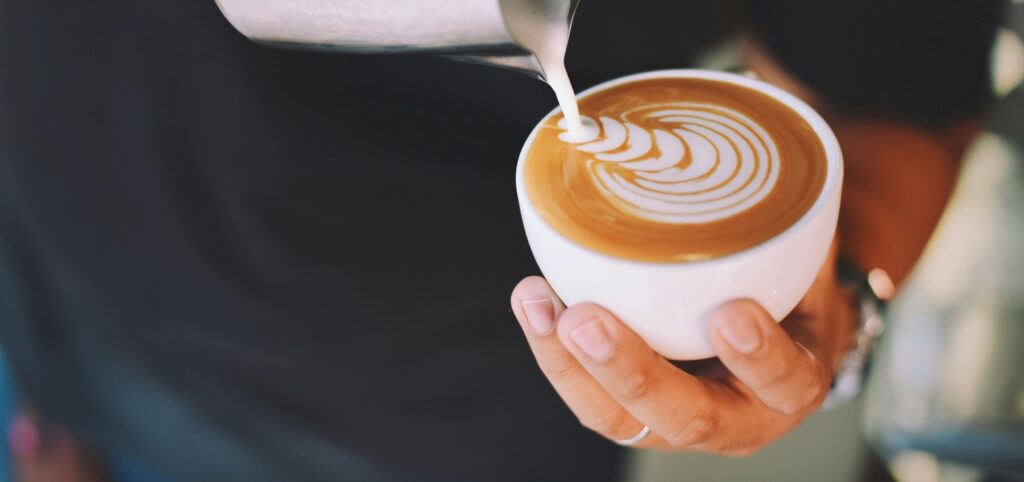
Other baristas prefer the technique known as etching, where microfoam is poured onto the coffee before a small tool is used to draw designs into the foam. Some use specially designed stencils, sprinkling cinnamon, cocoa or other powders to create intricate patterns and add a personal touch to the finished drink.
What many coffee lovers may not realise is that latte art is inherently temporary. It exists within a narrow window of time. The two key elements that make the art possible crema and microfoam are both unstable. Within seconds, the crema begins to dissipate and the foam starts to separate, meaning the artwork gradually fades away.
Perhaps that is what makes it so special.
Every cup is unique. Every design is created in the moment. Every masterpiece is destined to disappear.
The history of latte art reflects the global evolution of coffee culture itself. Although its roots can be traced to Italy following the development of espresso and microfoam, latte art gained international recognition through pioneers in both Italy and the United States during the 1980s and 1990s. Their innovations transformed coffee preparation from a purely technical process into a form of artistic expression.
Today, latte art has become one of the defining symbols of specialty coffee culture worldwide.
For the organisers of Battle of the Beans, celebrating baristas is a natural extension of celebrating great coffee.
Coffee competitions often focus on the bean, the blend or the roasting process. While these elements remain critically important, the organisers believe the people who bring coffee to life deserve equal recognition. Baristas are often the public face of coffee culture, creating experiences that keep customers returning day after day.
Their knowledge helps consumers understand different coffee varieties and brewing methods. Their enthusiasm introduces people to new flavours and origins. Their creativity turns an everyday beverage into something memorable.
Most importantly, they create moments of connection.
A beautifully crafted coffee can brighten a morning meeting, spark a conversation between strangers or provide a welcome pause during a busy day. Behind many of those moments stands a skilled barista who has invested countless hours perfecting their craft.
The Battle of the Beans competition aims to shine a spotlight on these often-unsung professionals and to acknowledge the vital role they play in the growth of South Africa’s coffee industry.
As KwaZulu-Natal’s coffee scene continues to develop, its baristas are helping to raise standards, inspire innovation and build a deeper appreciation for specialty coffee among consumers.
So the next time you admire the perfect heart floating on your cappuccino or the intricate rosetta crowning your latte, take a moment to appreciate the artist behind it.
After all, KZN’s baristas are the graffiti artists of the coffee world creating beautiful, temporary masterpieces one cup at a time.