KwaZulu-Natal’s coffee industry should “get up and smell the coffee” if it hopes to secure a meaningful share of one of the world’s most lucrative consumer markets.
That was the message from Dr Marsha Gabriel, South Africa’s honorary consul to Ethiopia.
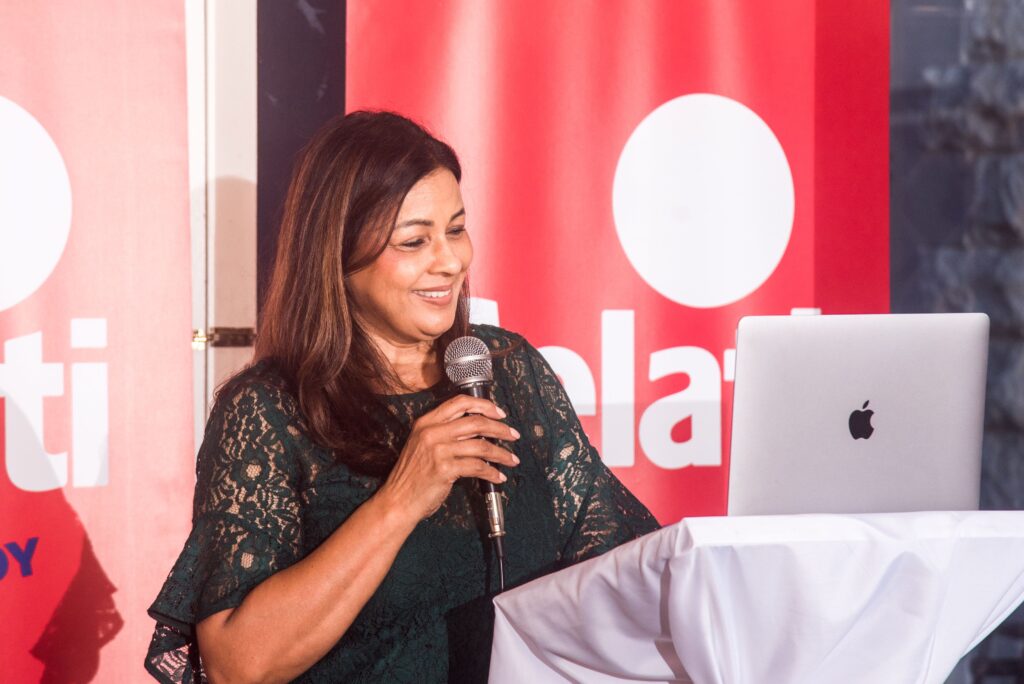
Speaking at the Battle of the Beans 2025 awards ceremony held at the Grand White earlier this year, she urged local entrepreneurs, coffee shop owners and investors to rethink the province’s role in the global coffee economy.
Her message was clear — KZN should not merely consume or retail coffee, but actively participate in roasting, branding, packaging and exporting it.
“Get up and smell the coffee, because it’s ours,” she declared. “They just rebranded it.” Using the example of Barundi, one of the world’s poorest nations, she explained that exporters purchased coffee for ridiculously low sums, packaged and rebranded it and then sold it back to South Africans at unaffordable prices – only to see Africans see it as a prestige brand rather than their own coffee!
That phrase became one of the defining moments of the evening, encapsulating her frustration that African coffee value chains continue to benefit foreign markets more than African economies themselves.
ETHIOPIA’S COFFEE LEGACY
Gabriel used the platform to challenge long-held misconceptions about Ethiopia while also highlighting the country’s historical and economic relationship with coffee.
“Often I find that when I’m introduced as the honorary consulate for Ethiopia to South Africa, people tend to feel very sorry for me. Ethiopia is not what the West has portrayed via the media. Ethiopia is not a child with a big tummy and runny nose. As a matter of fact, it is the fifth fastest growing economy on the continent,” she explained.
She reminded the audience that coffee was first discovered in Ethiopia, making it central to the country’s identity and economy: “This means that’s our heritage. It’s our legacy. It makes us the biggest distributor of coffee on the globe and the biggest producer of coffee.”
However, while Ethiopia may be one of the world’s leading producers, Gabriel stressed that the evening was not about one country alone.
“Tonight is not about Ethiopia,” she said. “Tonight it’s about people.”
The grit behind every coffee shop
Drawing on her own experience in hospitality, Gabriel spoke candidly about the realities of running coffee-focused businesses in a highly competitive environment.
“I’ve been in the industry for 17 years with three restaurants,” she explained. “Coffee shops are not written in boardrooms and on spreadsheets. Coffee shops are early mornings, late nights.”
She described the strength required to survive in the industry, particularly when quality operators compete against businesses with lower standards but stronger sales volumes: “It is about resilience. It is about fighting against those that really don’t know about coffee – and it takes guts, it takes resolve and it takes excellence in order to thrive in the coffee business.”
Her comments resonated strongly with independent coffee shop owners attending the event, many of whom continue to navigate rising operational costs, intense competition and changing consumer expectations.
“We just closed one of our restaurants after 17 years in Gateway,” Gabriel revealed. “It is not an easy game.”
Yet she argued that competition remains essential to improving standards across the sector.
“Growing bigger and better coffee does not mean the fight to survive,” she said. “It means raising the bar. Competition makes us better. It sharpens our quality. It fuels our innovation.”
A BILLION DOLLAR OPPORTUNITY
A major theme of Gabriel’s address was the enormous economic potential of coffee — both globally and within South Africa.
Quoting international market statistics, she highlighted the scale of the opportunity available to entrepreneurs willing to think beyond traditional retail models.
“The two most sold products in the globe — number one is fuel and number two is coffee,” she said. “We want that market share. Simple as all that.”
According to the figures she shared, combined global coffee revenues reached approximately US$461 billion in 2024, including both retail and hospitality sales. She contrasted these numbers with South Africa’s comparatively underdeveloped coffee production and processing sector.
Her concern centred on the fact that South Africa imports raw or processed coffee from other countries, only to re-export products without fully capturing the value chain locally.
Gabriel argued that KZN possesses the entrepreneurial talent, technical expertise and business capacity needed to establish local roasting and packaging operations: “I believe there’s enough talent and expertise in this room and there’s enough business sense to open a roastery.”
BUILDING A COFFEE ECONOMY
One of the most ambitious ideas outlined during the speech involved the use of Special Economic Zones (SEZs) to stimulate coffee processing and trade partnerships between South Africa and Ethiopia.
“Why can’t we roast our own coffee, brand it, package it and then distribute?” Gabriel asked.
She explained that SEZ structures could reduce taxes and duties while helping South Africa build bilateral trade relationships with leading coffee-producing nations.
Gabriel also linked coffee entrepreneurship to broader economic development and job creation.
Speaking about discussions with the Small Enterprise Development Agency (SEDA), she recalled challenging officials to think differently about graduate employment. Her proposal included expanding coffee shops across the country while simultaneously training graduates to become business owners rather than job seekers.
“Working out of an SEZ will have a ripple effect, and that is to open coffee shops across the countries and train our graduates to become business owners,” she explained.
A WAKE-UP CALL FOR INVESTORS
Throughout the speech, Gabriel repeatedly urged investors and policymakers to recognise the long-term value of coffee as an industry capable of driving meaningful economic growth. She criticised what she described as weak financing models for small businesses, noting that proposed funding packages were unrealistic for launching sustainable coffee ventures.
Her broader frustration, however, centred on the loss of African coffee value to international markets. Without naming countries, she described instances where foreign operators sourced coffee cheaply from African producers, processed it abroad and sold it back to African consumers at premium prices.
For Gabriel, the solution lies in African collaboration, stronger regional investment and local ownership of the coffee value chain.
MORE THAN JUST COFFEE
In closing, Gabriel reminded attendees that coffee businesses are ultimately about people, relationships and perseverance: “Coffee shop owners, we don’t just sell coffee. We build markets, we empower entrepreneurs and we reshape how coffee has to be consumed.”
She ended with a message of encouragement to the independent operators gathered at the awards ceremony.
“You are not the small players in a big game,” she said. “You are the reason the game exists.”